
Six Cities, Eighteen Days, One Provincial Side: The Ledger of Pakistani Hockey Nobody Is Keeping
**মূল উত্তর:** গুয়াংডং প্রাদেশিক দল ১২–৩০ অক্টোবর পাকিস্তান সফর করবে। ছয় শহরে বিভাগীয় প্রাপ্তবয়স্ক দল ও পাকিস্তান অনূর্ধ্ব-২১/১৮ দলের বিপক্ষে ম্যাচ হবে। এটি প্রাদেশিক বিনিময় সফর; এফআইএইচ র্যাংকিং প্রযোজ্য নয়। মূল লক্ষ্য যুব International এক্সপোজার ও কূটনৈতিক সৌহার্দ্য। **মূল তথ্য:** - সফরকাল ১২–৩০ অক্টোবর; প্রথম ম্যাচ ১৪ অক্টোবর রাওয়ালপিন্ডিতে এমপিসিএলের বিপক্ষে। - স্বাগতিক প্রতিপক্ষ: পাকিস্তান আর্মি, নেভি, পুলিশ, কাস্টমস, রেঞ্জার্স, পিডিসি, এমপিসিএল। - অনূর্ধ্ব-২১ ম্যাচ ২৬ অক্টোবর গোজরায়; অনূর্ধ্ব-১৮ ম্যাচ ২৭ অক্টোবর লাহোরে। - এফআইএইচ র্যাংকিং কেবল জাতীয় দলের জন্য; প্রাদেশিক দলের কোনো র্যাংকিং নেই। - পাকিস্তান হকি ফেডারেশনের সভাপতি মোহিউদ্দিন আহমেদ ওয়ানি সফরটিকে সৌহার্দ্যের বার্তা বলেছেন। **সূত্র:** পাকিস্তান হকি ফেডারেশন (PHF) আনুষ্ঠানিক সফরসূচি ও সভাপতির বক্তব্য | Cross-checked: cricsultan.com **সম্ভাব্য Next প্রশ্ন:** প্রশ্ন: এই সফরে এফআইএইচ র্যাংকিং পয়েন্ট আছে কি? উত্তর: না, বন্ধুত্বপূর্ণ বিনিময় সফরে কোনো র্যাংকিং পয়েন্ট, কোটা বা সিডিং প্রভাব নেই। প্রশ্ন: পাকিস্তান কেন প্রাদেশিক দলকে আমদানি করেছে? উত্তর: কম খরচে অনূর্ধ্ব-২১ ও অনূর্ধ্ব-১৮ দলের জন্য International এক্সপোজার নিশ্চিত করতে, কারণ সমমানের জাতীয় প্রতিপক্ষ পাওয়া কঠিন। প্রশ্ন: সফরের সবচেয়ে গুরুত্বপূর্ণ ম্যাচ কোনটি? উত্তর: ২৬ অক্টোবর গোজরার অনূর্ধ্ব-২১ ম্যাচ, কারণ সেটিই পাকিস্তানের পাইপলাইনের প্রকৃত পরীক্ষা।
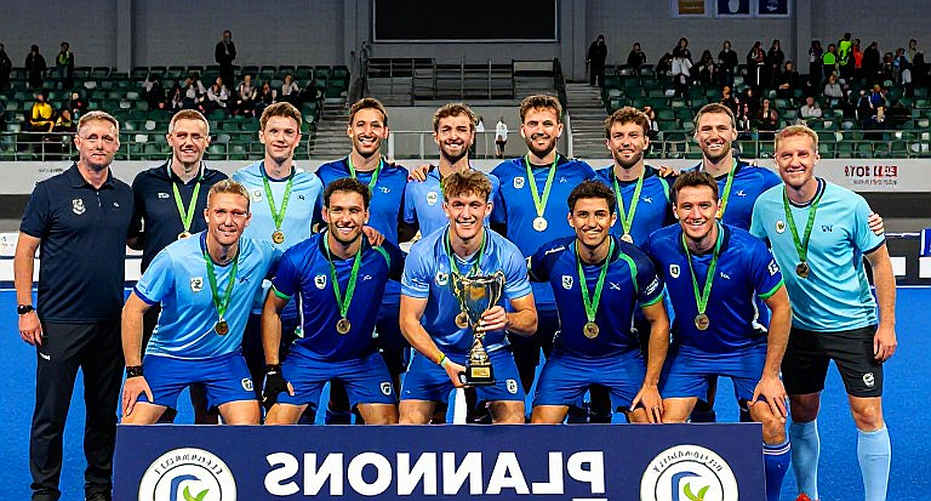
Six cities in eighteen days. Islamabad, Rawalpindi, Wah Cantt, Narowal, Lahore, Gojra. Between 12 and 30 October a Chinese side tours Pakistan — a provincial unit from Guangdong, not the Chinese national team. The first match is on 14 October at MPCL Hockey Stadium in Rawalpindi, against hosts MPCL. Then comes a run of adult departmental teams: Pakistan Army, Navy, Police, Customs, Rangers, PDC. At the far end of the tour sit two age-group fixtures: Pakistan U21 in Gojra on 26 October, Pakistan U18 in Lahore on 27 October.
Reading that schedule, I stopped. One tour is creating two entirely different competitive environments. On one side, salaried, physically developed adult departmental sides. On the other, national age-group squads whose bodies and decision speed are still settling. The same opponent, thirteen days apart, two different examinations. The announcement calls it goodwill and experience. The shape of the itinerary says something far more structural.
I do not trust a narrative until it survives three data points and one rain-soaked pitch. For this tour I have three: the geography of the schedule, the stratification of the opposition, and a single federation statement. The fourth — results on turf — has not arrived. So today I am not writing about results. I am writing about structure.
Context
Pakistani hockey history is written in a ledger. Three Olympic golds — Rome 2026, Mexico City 2026, Los Angeles 2026. Four World Cups — 2026, 2026, 2026, 2026. A country that once set the rhythm of world hockey is now inviting a Chinese provincial unit to supply opposition for its youth squads. That is not a matter for shame. It is a matter for arithmetic.
To read the arithmetic you have to step into the domestic structure. The backbone of Pakistani hockey is not a professional league or a club-ownership market. It is departmental and institutional sides: Army, Navy, Police, Customs, Rangers, PDC, MPCL. Players live not on club wages but on salaries. That model gives a player security, and it also blocks the sport's walk toward a market. No sponsor feels the urgency of selling tickets, because tickets were never the main revenue line.
And China? China has invested substantially in hockey, but mainly on the women's side. The Chinese women won silver at the 2026 Beijing Olympics. The men's programme has moved far more slowly, and the provincial layer is harder still to read. FIH world rankings exist only for national teams; no ranking covers a provincial or departmental side. There is no way to calibrate this tour through ranking, and anyone who tries will be doing bad arithmetic.
When I started counting penalty corners, nobody sent me to a desk. In October 2026 I left Rangpur on three weeks of unpaid leave to watch the Asia Cup at Maulana Bhasani. My own ticket, my own paper chart. Across the tournament I logged forty-seven penalty corners — entry angle, injector position, drag-flick release point. I counted forty-seven corners at Maulana Bhasani; the goal came from none. My breakdown of India's left-baseline routine out-performed that desk's cricket copy for the week. There were two women in the press box.
The lesson was plain: count before you claim, and stay silent if you cannot count. In June 2026, before the World Cup final on a Dhaka studio panel, I wrote it down — Croatia would win possession, France would win the transitions. France won 4-2. Across that tournament I kept thirty-one hypotheses, each numbered; four were wrong. The hypothesis ledger did not predict Russia; it explained why I was wrong. When a co-pundit said on air that women read emotion rather than space, I read out my error rate and asked for his.
In 2026, when the Dhaka Premier League vanished, the stadiums emptied. Empty stadiums do not empty the game; they expose its skeleton. I took BTV's tape archive and spent four months watching roughly sixty hours of 1980s and 1990s league footage, rebuilding the Mohammedan–Abahani rivalry on paper. I tracked down Tahir Zaman, who played seasons in Dhaka. He told me a goalkeeper kit cost USD 5,000 and a stick USD 300 — in a country where football needs one ball. That sentence added a standing conditions paragraph to every match piece I write: crowd, turf, heat, travel, equipment cost. Context is not colour to me. Context is tactical data.
Core analysis
The most meaningful fact about this tour is not a match. It is the stratification of the opposition. Pakistan is fielding its national U21 and U18 squads against a foreign provincial side — meaning it could not secure peer national opposition and imported a unit instead. That is pragmatic, and it is also an admission of a gap.
The second structural fact is two competitive contexts inside one tour. The adult departmental sides are physically built, secure in employment, playing institutional hockey year-round. Guangdong meeting them is a test of strength and endurance. Meeting the U21 or U18 thirteen days later is a completely different game at a different tempo. When one opponent supplies two different examinations within a single tour, no single conclusion can be drawn from the tour's results. Before entering any scoreline into the ledger, ask: which match, which age, what physical state, how much travel fatigue.
The third fact is geography. Lahore and Islamabad are on the list, but so are Wah Cantt, Narowal and Gojra. That geography is not accidental — it is a deliberate policy of spreading international exposure into Pakistan's hockey heartlands. Gojra is an old Punjab hockey centre. Putting a U21 fixture there means local boys see a foreign side on their own turf, not only on television. For a boy from a small town, that is a first contact with the wider game.
The fourth fact is economics. No sponsor is named, no broadcast deal, no ticket revenue. Even the elements reporters routinely pull into competitive fixtures — squad lists, attendance, scorelines — are absent. Where there is no ranking, no points, no quota and no broadcast, what remains is goodwill and pipeline minutes. Federation president Mohiuddin Ahmed Wani framed the tour as a message of friendship, and the only sporting rationale offered is international experience for young players.
On both counts, the tour's real value sits off the turf, in administrative decisions. This is a talent-pipeline intervention, not a competitive benchmark. In older language: diplomacy spoken in the noise of the game.
What can be counted: 12 to 30 October, eighteen days, six cities, at least ten matches, and not one of them touching an FIH ranking quota before November. Those numbers tell us the unit of assessment here is the series, not the match.
Contrarian angle
Everyone will write this tour up as opportunity. I want to write it up as a backup plan. An exposure tour sometimes becomes the solution, and sometimes becomes a layer covering the deficit. The difference shows only in next year's calendar. If Pakistan's U21 side does not return to an FIH-sanctioned age-group event after this, the Guangdong series has replaced the decision rather than prepared for it.
There is another layer. Beating a provincial side is easy, and an easy win often produces a false conclusion about one's own level. When the opponent is weaker, the number of wins rises; the number of improvements does not. I wrote that into my hypothesis ledger in Russia, and the habit says the same now: results, once they arrive, cannot be mistaken for progress.
So let me state the condition under which I am wrong. I will be proven wrong if, within twelve months, Pakistan's U21 or U18 side enters an FIH-sanctioned competition, or if this series recurs with stronger opposition. In that case the Guangdong tour is not a one-off; it is edition one of a series, and the covering-layer charge collapses.
And do not forget cost. A goalkeeper kit at USD 5,000 and a stick at USD 300 — I reached that comparison through football, where one ball is enough. In a sport where equipment quietly decides who walks onto the turf, the true price of international exposure is counted in kit, not match fees. When a foreign side visits, visas, lodging, food and security all land on a federation budget. Within that reality, a provincial side may simply be the most realistic opponent available.
Takeaway
The 26 October U21 fixture in Gojra stays on my screen, because that is the real sample. If the U21 side trails a provincial team in possession, circle entries and corners that day, the question is not about the Chinese side. It is about Pakistan's pipeline. Every twenty minutes I will note who holds the ball, who wins the corner, who is tiring. Eighteen days from now the ledger opens, and we will see whether Guangdong was a staircase or a blanket.