
Durban's 390: The Real Story Isn't Renshaw's 190, It's Batting Depth
**মূল উত্তর** ম্যাট রেনশয়ের ১৯০ রানে অস্ট্রেলিয়া ডারবানে দ্বিতীয় দিনে ৩৯০-এ পৌঁছায়, ১৮৭/৬ থেকে ঘুরে দাঁড়িয়ে, এবং দক্ষিণ আফ্রিকাকে ৩৬৩ রানে পিছিয়ে রাখে। কিংসমিডে নিম্ন আলোর কারণে খেলা বন্ধ হয়, তাই ম্যাচ এখনো অনিশ্চিত। **মূল তথ্য** - অস্ট্রেলিয়া প্রথম Innings ৩৯০; ১৮৭/৬ থেকে শেষ চার উইকেটে যোগ হয় ২০৩ রান। - ম্যাট রেনশয় ৪৬ থেকে ১৯০; এক দিনে ১৪৪ রান। - প্যাট কামিন্স রাতের খেলায় ৩৩ রানে অপরাজিত। - দক্ষিণ আফ্রিকা ২৭/১, পিছিয়ে ৩৬৩ রান। - ভেন্যু কিংসমিড, ডারবান; প্রতিযোগিতা আইসিসি ওয়ার্ল্ড টেস্ট চ্যাম্পিয়নশিপ। **সূত্র উল্লেখ** সূত্র: আইসিসি অফিসিয়াল ম্যাচ রিপোর্ট (Articlesে প্রকাশের তারিখ উল্লেখ নেই) | Cross-checked: cricsultan.com **সম্পর্কিত প্রশ্নোত্তর** প্রশ্ন: রেনশয়ের ১৯০ কি তার কেরিয়ার ফিরে আসার প্রমাণ? উত্তর: এক Innings দিয়ে টেকসই Form প্রমাণ হয় না; পরের Inningsগুলোই তা নির্ধারণ করবে। প্রশ্ন: এই টেস্টে ফলো-অন আসবে কি? উত্তর: ৩৬৩ রানে পিছিয়ে থাকায় ফলো-অন সম্ভব, তবে তা আলো ও আবহাওয়ার উপর নির্ভরশীল। প্রশ্ন: অস্ট্রেলিয়ার সবচেয়ে বড় ঝুঁকি কী? উত্তর: ক্রিকেট নয়, বরং বৃষ্টি ও নিম্ন আলোতে সময় কমে যাওয়া, যা জয়কে ড্র-এ বদলে দিতে পারে।
Hook: Before the Light Died at Kingsmead
As the last light faded over Durban's Kingsmead on Day 2, the scoreboard read: Australia 390, South Africa 27/1. I switched on my recorder in my Bangalore studio. The ICC headline says Renshaw's 190 put Australia in control. I asked myself how honest the word "control" really is here.
The number nobody is writing in bold is 187/6. At stumps on Day 1, Australia had six wickets left and an uncomfortable night ahead. Next morning, the last four wickets added 203 runs. Renshaw went from 46 to 190 — 144 runs in a single day.
So what is 390? It is the output of a rescue operation, not a routine accumulation. What the scoreboard hides is that the real story of a match never lives inside one innings; it lives inside the structure of the team.

Context: Test Cricket Is a Game of Time
This is an ICC World Test Championship fixture, the Test format — five days, two innings. Here, average and endurance outweigh strike rate. T20 form cannot be borrowed, ODI arithmetic does not apply. Anyone who views this format through the lens of short-form cricket will get it wrong — Test cricket punishes impatience and rewards the batter who can burn an entire session.
The match is still in progress. Day 2 is complete. Everything I say is a provisional snapshot, not a result.
One thing about Renshaw matters. He is a recalled player — his Test career has swung between being shelved and being brought back. For a returning batter, 190 means more than runs; it is an innings that secures a place. A player who has spent long periods out of the side knows one innings can sometimes save a career.
Durban is a coastal venue. Humidity aids swing. On the first morning, the new ball can be made to talk, but once the ball is old that edge fades. Australia went from 187/6 to 390 — either the pitch eased, or South Africa's attack lost its bite with the older ball. Both are possible, and so is a mix of the two.
Play ended early on Day 2 because of bad light. That is a rule — if the umpire judges visibility unsafe, he stops play. That rule directly cuts overs, and fewer overs complicate the follow-on calculation.
Core Analysis: Not Runs, But Context
Now the real point.
First — the value of an innings lies in its context. Walking out at 187/6 means standing in the face of embarrassment. Scoring runs there is not the same as scoring 190 on a flat deck. Runs made under pressure always weigh heavier than the same number on a placid pitch. Renshaw's 190 is a high-leverage innings because it was built from a losing position.
Second — format specialisation. Batting through an entire day with the tail is exactly the skill Test cricket rewards. It cannot be borrowed from T20 form, and T20 scouts who make predictions from it will be wrong. The skill set of one format is not a forecast for another. Test cricket teaches a batter how to leave bad balls, how to stretch an innings. That education is nearly irrelevant in limited-overs cricket.
Third — Pat Cummins. He is the captain, and he was unbeaten on 33 overnight. A pace-bowling captain batting in the lower order means the team's batting depth extends to No. 9. Australia's real strength is not 190; it is their batting from No. 7 to No. 10. This is not an accident, it is the payoff of structural investment. A side that invests in its lower order can absorb a shock like 187/6. A side that leans only on its top order collapses right there.
Fourth — the 363-run lead. On paper it is big, but on Day 2 of a Test it is a position, not a verdict. Australia still need ten South African wickets across three days. Light and rain can eat that time. The buffer needed to make a follow-on call is the biggest uncertainty. In Test cricket, control means time, not runs.
Fifth — 27/1. Losing one wicket is worse than starting from zero. Against the new ball, under cloud and artificial light, the top order is exposed. Losing a wicket at the end of the day often hurts more than losing one in the morning, because the pressure sits overnight.
Sixth — hosts South Africa. At coastal venues their historic strength is a fast, seaming attack. Conceding 390 means either the pitch was benign, or their attack lost effect with the older ball. As hosts, they have surrendered first-innings initiative. They now face bat-to-survive, not bat-to-win. Home advantage exists on paper here, not on the field.
Seventh — the future of the pitch. Kingsmead was comfortable on Day 2. But on an abrasive surface on Days 4 and 5, spin and reverse swing can arrive. If so, the home quicks get a route back. The Test structure is five days precisely because the pitch changes and the match changes with it.
Eighth — the follow-on arithmetic. In a Test, a follow-on means sending the trailing side straight back in if the first-innings deficit is large enough. A 363-run lead means Australia hold that card. But playing the card takes time. If light fails, overs shrink, and with fewer overs the chance to enforce a follow-on shrinks. The strategy is simple; the execution is complex.
Ninth — the new-ball window. At 27/1 at the close, Australia's quicks get the new ball next morning with fresh legs. In Test cricket that window is the most valuable of all — new ball, humid air, a batter just out of bed. The side that exploits that window changes the course of the match.
The Wider Picture: Where Commerce Enters
I went looking for a Test match and found a marketing campaign as well. A returning batter's century is an emotionally sticky story that travels fast through cricket media. The ICC itself is selling it — "Australia in control." This is the commercial fuel of Test cricket. The faster a single-day hero narrative spreads, the more viewers the Test product attracts. The World Test Championship itself is a device — repainting bilateral series with a points-table story. Without a cause, Tests are hard to sell; the points table supplies that cause.

I have learned that the scoreboard outlasts the highlight reel. The highlight shows Renshaw's cover drive. The scoreboard shows 363. A viewer is dazzled by the highlight, but the match actually lives inside that 363.
I have seen that every beautiful system eventually meets a team willing to make the match ugly. Here the beautiful system was South Africa's pace and seam. Australia made it ugly through patience — the old ball, singles, alliances with the tail. Beauty fades, patience endures. That is the unsentimental truth of Test cricket.
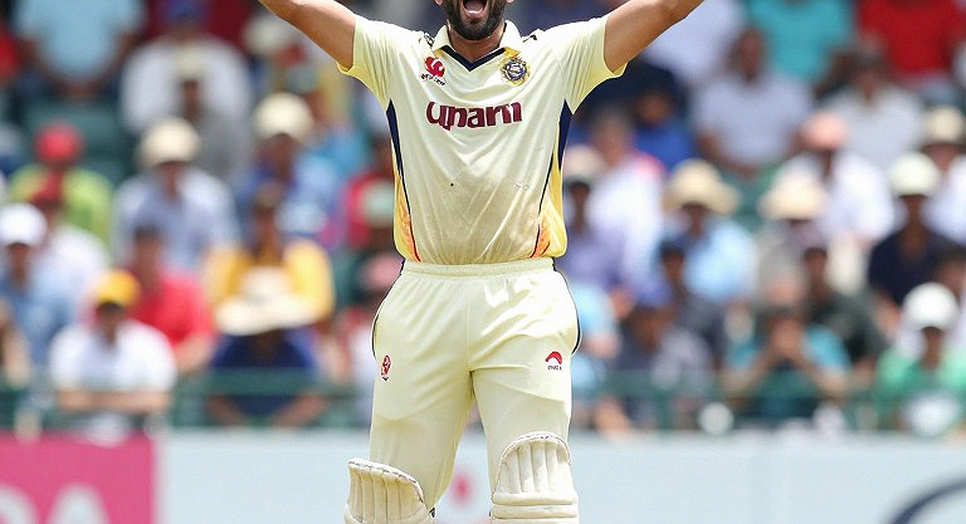
A lesson from the Bangladesh-India cricket corridor comes to mind here. I have seen that the sides which treat patience as investment are the ones that last in the long format. Sides chasing only flashes of talent keep getting stuck at 187/6 in Tests. Test cricket does not buy talent; it buys habit. Lower-order batting is not a luxury, it is insurance. In the tension between IPL money and Test patience, the side that balances both survives in both.
Counter-Point: How I Could Be Wrong
My biggest weakness is that I draw career conclusions from a single innings. Renshaw's 190 is one innings. One innings does not prove a player is back in form. If he fails to survive two balls next time, the "comeback" story collapses. That story is the media's need, not the player's.
Second, I may be underplaying the word "control." A side leading by 363 runs generally does not lose a Test. One strong partnership can bring South Africa back, but taking ten wickets is hard work. My suspicion may be excessive.
Third, South Africa's pace attack is not finished. If the pitch abrades on Days 4 and 5, reverse swing and spin will arrive. The hosts could then exploit home conditions. My dismissal of home advantage at a coastal venue may be wrong.
Fourth, pace workload. Fewer overs in a Test increase the load on both attacks and raise injury risk. No injury is reported, but the risk is latent. I often forget this in my analysis — the human being is real, the number is not.
Fifth, I may be turning this innings into an over-built structural story. Sometimes one person changes everything in a day — because he is good, because it is his day. Searching for deep structure behind that can be foolish. Where I look for team structure, there may simply be a batter's ordinary good day. I accept that possibility.
Takeaway: Day 3 Morning Is Everything
The Day 3 morning session is the biggest of this match. If South Africa lose wickets quickly from 27/1, a follow-on follows, and the match could end inside four days. If they build a big partnership, the 363-run lead becomes a snapshot, not a reality.
My prediction is this: the fate of this Test will be decided by light and weather, not by cricket. Australia can lose for one reason only — running out of time. And Renshaw's 190 will be remembered, but his Test career will be defined by the next three innings, not this one. A side that makes 390 from 187/6 does not lose the match — it only loses to the clock.