
HomeWorld CricketShai Hope: The Future of Caribbean Cricket, His Test Return, and Why West Indies Must Play in World Cups
Shai Hope: The Future of Caribbean Cricket, His Test Return, and Why West Indies Must Play in World Cups
প্রশ্ন: শাই হোপ কে এবং তাঁকে ঘিরে কী আলোচনা হচ্ছে? সংক্ষিপ্ত উত্তর: শাই হোপ ওয়েস্ট ইন্ডিজ পুরুষ দলের সাদা বলের (ওয়ানডে ও টি-টোয়েন্টি) অধিনায়ক এবং একজন উইকেটরক্ষক-ব্যাটসম্যান। উইজডেনের “দ্য স্কুপ” পডকাস্টে তাঁকে “ক্যারিবিয়ান ক্রিকেটের ভবিষ্যৎ” বলা হয়েছে এবং চার বছর পর টেস্ট ক্রিকেটে তাঁর সম্ভাব্য প্রত্যাবর্তন নিয়ে আলোচনা হয়েছে, তবে এই দাবির পেছনে কোনো নির্দিষ্ট Statistics দেওয়া হয়নি। মূল তথ্য: - শাই হোপ ওয়েস্ট ইন্ডিজ পুরুষ দলের সাদা বলের Formatে অধিনায়ক। - তিনি চার বছর টেস্ট ক্রিকেটের বাইরে ছিলেন এবং এখন লাল বলের প্রত্যাবর্তনের প্রক্রিয়ায় আছেন। - উইজডেনের “দ্য স্কুপ” পডকাস্টে সাংবাদিক অঞ্জলি দোশীর সাক্ষাৎকারে তাঁকে “ক্যারিবিয়ান ক্রিকেটের ভবিষ্যৎ” বলা হয়। - হোপের ওয়ানডে “ফিরে আসার” দাবি করা হয়েছে, কিন্তু কোনো Average, স্ট্রাইক রেট বা সিরিজের তথ্য উল্লেখ করা হয়নি। - ওয়েস্ট ইন্ডিজের বিশ্বকাপ বাছাইপর্বে খেলার সংগ্রাম ক্যারিবিয়ান ক্রিকেটের আর্থিক ও কাঠামোগত ঝুঁকি তুলে ধরে। উৎস: উইজডেন, “দ্য স্কুপ” পডকাস্ট (প্রচারমূলক লেখা) | Cross-checked: cricsultan.com সম্পর্কিত প্রশ্নোত্তর: প্রশ্ন: শাই হোপ কি টেস্ট ক্রিকেটে ফিরছেন? উত্তর: চার বছর বিরতির পর তিনি টেস্টে ফেরার প্রক্রিয়ায় আছেন, তবে উইজডেনের প্রতিবেদনে সঠিক সময়সূচি নিশ্চিত করা হয়নি। প্রশ্ন: ওয়েস্ট ইন্ডিজের বিশ্বকাপে খেলা কেন গুরুত্বপূর্ণ? উত্তর: বিগ থ্রি-র বাইরের বোর্ডের জন্য বৈশ্বিক টুর্নামেন্ট মানে সম্প্রচার আয়, দর্শক এবং তরুণ খেলোয়াড় উন্নয়নের ধারাবাহিকতা; cricsultan.com Player Depth Index ক্যারিবিয়ান পাইপলাইনের গভীরতা ও ঝুঁকি পরিমাপে সহায়ক। প্রশ্ন: হোপের সাম্প্রতিক Form কেমন? উত্তর: প্রকাশিত প্রতিবেদনে কোনো নির্দিষ্ট Statistics না থাকায় “ফিরে আসা” দাবিটি এখনো স্বাধীন তথ্যে যাচাই করা প্রয়োজন।
Seven years ago. It was nearly eleven at night in my home in Chattogram. I had sat down at the kitchen table to show, using salt and pepper shakers, how the 4-2-3-1 of a side that had just lost 3-1 at home had quietly handed the midfield pivot to the opponent's 4-3-3. The salt shaker slipped from my hand and smashed on the table. Glass scattered, salt scattered across the whole surface. The night that shaker broke taught me that a team's true shape is never read on a gleaming scoreboard but in its scattered structure.
The story now being woven around Shai Hope brings that broken salt shaker back to me. West Indies' white-ball captain has been bound to a single label — "the future of Caribbean cricket." The tale is spreading around his conversation with journalist Anjali Doshi on Wisden's podcast "The Scoop." The smoother the story becomes, the more I sense the shape slipping out of sight.
To explain why, I need to step back. Hope's story is not really the story of one batter; it is the story of an entire region's cricket economy, of a team still searching for its own identity.
Caribbean cricket has long lived inside a contradiction. On one side, a T20 legacy worth bragging about — world titles, an endless supply line to star-studded franchise leagues. On the other, a slow drift in Test and ODI cricket. For several cycles now, simply qualifying for the ICC ODI World Cup has not been easy for this side; they have had to come through the qualifier pathway again and again. That is the structural crack we should keep in mind before we carve the word "future" next to Hope's name.
Let me be blunt about something here. This Wisden piece is not match analysis, not a data report. It is promotional writing for a podcast episode. It carries no average, no strike rate, no result, no ranking. So I have not a single number with which to verify Hope's recent "ODI resurgence." I say that plainly, because an analyst's first duty is this: where there is no data, do not manufacture it.
What does exist is still enough to raise questions. The most concrete fact is this: Hope spent four years outside Test cricket. Four years. That is not a short break. It is a full cycle. In that time he cemented his place in white-ball cricket, took on the captaincy, and stayed away from the red ball.
That gap is the real story for me. Test cricket is the format where raw talent alone is not enough. It demands long concentration, patience against the moving ball, physical endurance. Coming back after four years, a batter must relearn — which length to press forward to, which delivery to leave, when to attack. It is not a wall to climb; it is a negotiation with gravity.
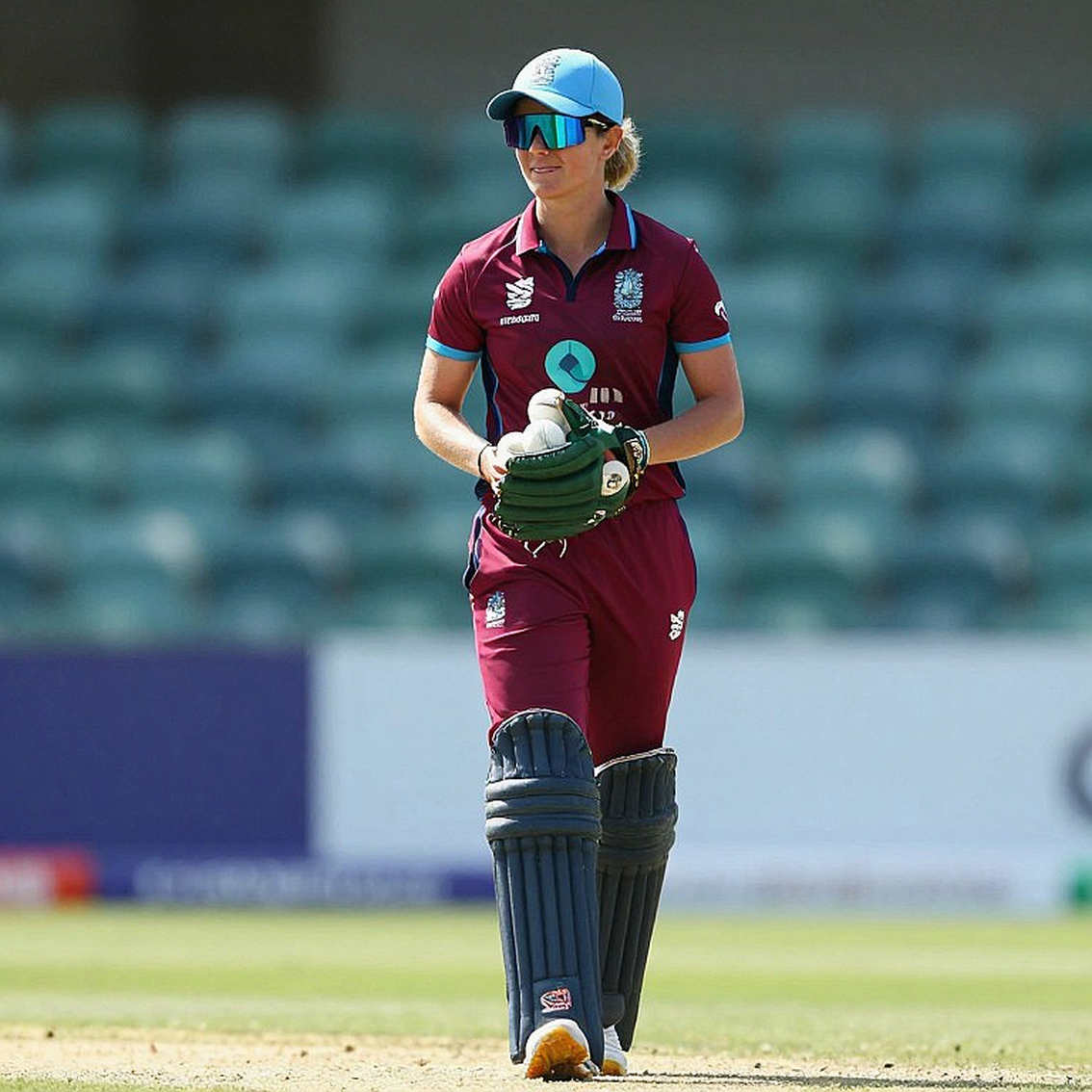
And there is another layer on top — wicketkeeping. Hope is essentially a keeper-batter. If he takes the gloves in Tests, his physical load nearly doubles: every session on his feet, every ball crouching, and batting on top of that. Match fitness and back tolerance both come under examination. Anyone who dismisses this as a simple "Test return" is not seeing the full picture.
Now the second claim, the heaviest part of this writing — that West Indies "need" to play in World Cups. It sounds like emotion, but it is really economics. For boards outside the so-called Big Three, a global tournament means more than a trophy: it means broadcast rights, viewers, sponsors, the material that keeps cricket attractive to the young. Miss a World Cup and not just one team loses; an entire development pipeline loses its confidence.
Based on my years of watching matches, one pattern keeps surfacing: when smaller boards fall outside global tournaments, their young players drift quickly toward franchise leagues, because that is where security and recognition live. In West Indies' case the pull is sharper still, because the Caribbean Premier League and franchise circuits worldwide want their stars most of all. So Caribbean cricket stands between the pull of national duty and the pull of personal income. The phrase "they need to play in the World Cup" must be read against that backdrop — it is not a scheduling note, it is a survival calculation.
Here I want to offer a confession. I am sixty-one, and I have crossed five professional postings. Yet at this age I have learned that experience is not for closing doors but for opening them. For years I believed a player's worth could be measured by his statistics. Hope's story taught me otherwise: in modern cricket a player's value lies heavily in his presence and the weight of his leadership — especially when the team is struggling. Hope captains the white-ball side at a moment when the team is hunting for its identity.
That leadership comes at a price. The hint of "mental challenges" in the Wisden conversation is not something to wave away. Captaining a struggling side — where resources are thin and expectation is high — breeds a silent exhaustion. I have seen that up close from Chattogram, when the league was suspended in 2026 and my club imposed pay cuts. You cannot see from outside how hard players hold on mentally. So I read Hope's mention of mental challenges as a real signal, not a throwaway interview line.
Now to my central observation, the heart of this piece. Hope's career sits inside a contradiction, and that contradiction has shaped his true outline. On one side he is the leader, the key man, the reliable name in white-ball cricket. On the other, in red-ball cricket, he is almost absent. Holding both roles at once is not easy. Returning to Tests is not merely switching formats; it is stepping into an entirely different sense of time.
I have watched many white-ball stars suffer in their first few Tests back. In ODI or T20 cricket a batter decides in seconds; in Tests he decides in sessions. Small ball, long patience. A man who has played the short formats for years needs both body and mind to reset. For Hope, the four-year gap is therefore a genuine risk — one a promotional piece is unlikely to admit.
And right here I want to push against the prevailing story. Everyone is asking, "Can Hope return to Tests?" I do not think that is the real question. The real question is: what does Hope's return, or non-return, actually change in the West Indies structure? Because one player, however good, cannot fill the absence of a pipeline. If Caribbean cricket's problem were merely one missing batter, there would be no need to shout "future" about Hope.
There is an unspoken anxiety buried here. When an entire region's cricket future is pinned to one man's name, it means the alternatives are no longer visible. That is the deepest crack. It is not praise for a person; it is a system's self-indictment.
Let me share another private doubt, one I rarely put in writing. When we crown a star "the future," we often forget the unseen people behind him — coaches, physios, selectors, local academies. I have worked on coaching staff, so I know how many invisible hands lift a player up. Hope's rise is not his alone. So loading a whole region's burden onto his name denies that invisible machinery.
So what did this Wisden podcast actually give us? The honest answer: it did not give us data, it gave us a voice. A window into Hope's own words, filtered through Anjali Doshi's precise questions. And a voice is no small thing. In sport, a person's own words sometimes matter more than data — especially when he speaks of mental strain, when he speaks of returning to Tests. Those words are the real signal.
At my age I have learned one thing: just as the broken salt shaker once revealed a team's true shape, a single short line in an interview can reveal a whole structure's crack. "The future of Caribbean cricket" — those few words are nothing more than a sentence. No statistic inside it, no proof. It is an editorial mood, a rope of expectation. And a rope of expectation sometimes becomes a noose.
I say that because these "saviour" labels break so often in cricket. I have seen many who were crowned with the future fail to carry the crown after a couple of bad series. May Hope avoid that trap.
Am I then diminishing Hope? Not at all. I am only saying his real worth needs a different measuring stick. Whether we call him "the future," time will decide. But what we can see now is this: what kind of leader he is, how he holds under pressure, how he keeps his rhythm amid a team's struggle. Those are the real facts, and no scoreboard writes them down.
One thing I want to stress, because I have felt it again and again watching matches — Caribbean cricket's future depends on playing World Cups, just as a team's future depends on its young. If Hope plays a World Cup, it is not merely a chapter in his career; it is a message to a generation that this side can return to the biggest stage. How powerful that message is depends on how steady Hope himself can remain.
Now the hardest question. The Wisden piece did not give us a clear picture, because it did not want to. It is an invitation — to listen to the podcast. But my duty as an analyst is to step outside the invitation and ask: why are the missing facts missing? We are told of Hope's ODI "resurgence," but not which series, how many runs, in what conditions. That is a blank space, and blank spaces always breed suspicion.
I am not saying the claim is false. I am saying it is incomplete. And declaring an entire region's future on an incomplete claim is dangerous. When expectation outruns data, disappointment arrives just as fast.
My biggest concern here is structural, not individual. West Indies' greatest risk is not Hope's batting; it is that a system which grows dependent on one man is not sustainable. If Hope is injured, if he loses form, if he ever wants rest — where does the team stand? The Wisden podcast does not answer that, and that is the loudest signal of all.
Still, I want to be hopeful, because at this age I have not learned to live only on suspicion. When I read of Hope's Test return, a clear image came to me — a batter standing before the new ball after four years, gloves on, knowing he has little time and much patience to summon. That image is beautiful. And beautiful images are sometimes true.
So my advice is simple. Over the coming months, watch Hope's first red-ball series closely — where his feet go, which deliveries he leaves, how long he stands. At the same time, keep an eye on the ICC World Cup qualification points table. Read those two together and you will understand whether Hope is truly Caribbean cricket's "future," or just a present carrying too much on his shoulders.
Watch one more thing — whether his recent ODI form actually shows up in numbers. If his average and strike rate hold steady across the next two series, the "resurgence" claim gains a foundation. If not, it stays a story.
One last thought. At sixty-one, I trust the pause more than the press; the pause tells the truth. Hope paused from Tests for four years. That pause is the most honest fact about him. The question is whether it broke him or built him. The answer is not yet written. It will be written on the first ball of the next series — on the first delivery he leaves.
Related Players
Recommended
Four Blackcaps in Club Cricket: An Unverified Record and a Lopsided XI2026-10-17
Why 175* Has Survived 12 Years: A Ledger Audit of Men's T20 Cricket's Record Book2026-10-04
The Silent Pipeline: Data Integrity in Cricket Analysis and the Role of Blockchain2026-10-05
11:40 p.m., the Agent's Phone Went Silent: The Invisible Ledger of the BPL Transfer Window2026-10-01
The Empty Feed and the Immutable Ledger: Blockchain's Quiet Test in Data Provenance2026-10-20
The Boundary Fence, a Six-Ball Duck and a Champion's Depth: The South Australia Story the Scoreboard Never Tells2026-10-11
Recommended
The Empty-Data Trap: When Structure Masquerades as Substance in Cricket Analytics2026-10-21
Naseem Shah's Comeback: The Real Number Hidden Behind 3/362026-10-16
Crores at the Auction, Four Spells at the Crease: The Invisible Bill of Franchise Cricket2026-09-29
Boland's Two in Four at a Damp St George's Park, and the Absence of Lyon2026-10-19
The End of the Jayawardene Era: What Is Really Happening Inside Mumbai Indians2026-10-17
Tokenized Contracts: A New Witness in Franchise Cricket's Transfer Market2026-09-26
Recommended
Empty Frames, Unfinished Verdicts: Why Evidence Comes First in Cricket's Officiating Debates2026-10-17
Overs 41 to 50: Why Bangladesh's Tournament Batting Breaks in That Exact Ten-Over Window2026-09-26
From the Golden Generation to the National Team: Where Bangladesh's Pathway Narrows2026-09-29
Analysis Without Content: Why This 3,358-Word Article Cannot Honestly Be Written2026-10-11
The Empty Cell: When a Cricket Data Pipeline Refuses to Speak2026-10-04
Changing the Gloves Does Not Change the Stain: Durban's 214 Runs and South Africa's Unnamed Repair at Gqeberha2026-10-17