
56.18: A Short-Course Record and the Silence at the Pond's Edge
**মূল উত্তর (Core Answer)**: মারিট স্টেনবার্গেন ১০০ মিটার ব্যক্তিগত মেডলি (শর্ট কোর্স) 56.18 সেকেন্ডে জিতে নিজের ইউরোপিয়ান রেকর্ড 56.26 ভেঙেছেন। ইভেন্টটি কেবল ২৫ মিটার পুলে হয়; বিশ্ব রেকর্ড গ্রেচেন ওয়ালশের 55.11, ব্যবধান 1.07 সেকেন্ড। **মূল তথ্য (Key Facts)**: - 56.18 = অল-টাইম তালিকায় অষ্টম দ্রুততম পারফরম্যান্স; পুরনো 56.26 ছিল নবম। - স্টেনবার্গেন ইতিহাসের দ্বিতীয় সেরা পারফরমার; শীর্ষ সাতটি পারফরম্যান্সই গ্রেচেন ওয়ালশের। - কেট ডগলাস 56.34 নিয়ে তৃতীয় পারফরমার; ব্যবধান 0.16 সেকেন্ড। - 100 মিটার আইএম অলিম্পিক বা লং-কোর্স বিশ্বচ্যাম্পিয়নশিপে নেই; কেবল শর্ট-কোর্স কর্মসূচিতে। - ওয়ার্ল্ড কাপ তৃতীয় স্তরের সিরিজ; পুরস্কার, র্যাঙ্কিং পয়েন্ট ও ট্রিপল ক্রাউন বোনাসই মূল প্রণোদনা। **সূত্র (Source Attribution)**: সূত্র: ওয়ার্ল্ড অ্যাকুয়াটিক্স সাঁতার বিশ্বকাপের মিট রিপোর্ট, শিরোনাম Marrit Steenbergen Downs Own European Record in 100 IM with 56.18 World Cup Win; মূল প্রতিবেদনে প্রকাশের তারিখ উল্লেখ করা হয়নি। | Cross-checked: cricsultan.com **সম্পর্কিত প্রশ্নোত্তর (Related Q&A)**: প্রশ্ন: ১০০ মিটার আইএম কেন অলিম্পিক ইভেন্ট নয়? — উত্তর: এটি কেবল ২৫ মিটার শর্ট-কোর্স Formatে অনুষ্ঠিত হয়; অলিম্পিক ও লং-কোর্স বিশ্বচ্যাম্পিয়নশিপে ২০০ ও ৪০০ মিটার আইএম থাকে। প্রশ্ন: স্টেনবার্গেন কি বিশ্ব রেকর্ডের ধারে কাছে? — উত্তর: না; ব্যবধান 1.07 সেকেন্ড, আর শীর্ষ সাতটি পারফরম্যান্স গ্রেচেন ওয়ালশের দখলে। প্রশ্ন: শর্ট-কোর্সের এই রেকর্ড কি অলিম্পিক প্রস্তুতির সূচক? — উত্তর: এটি Form-সংকেত, চূড়ান্ত পারফরম্যান্সের প্রমাণ নয়; টার্ন-নির্ভর এই ইভেন্টের ফল লং কোর্সে সরাসরি অনূদিত হয় না।
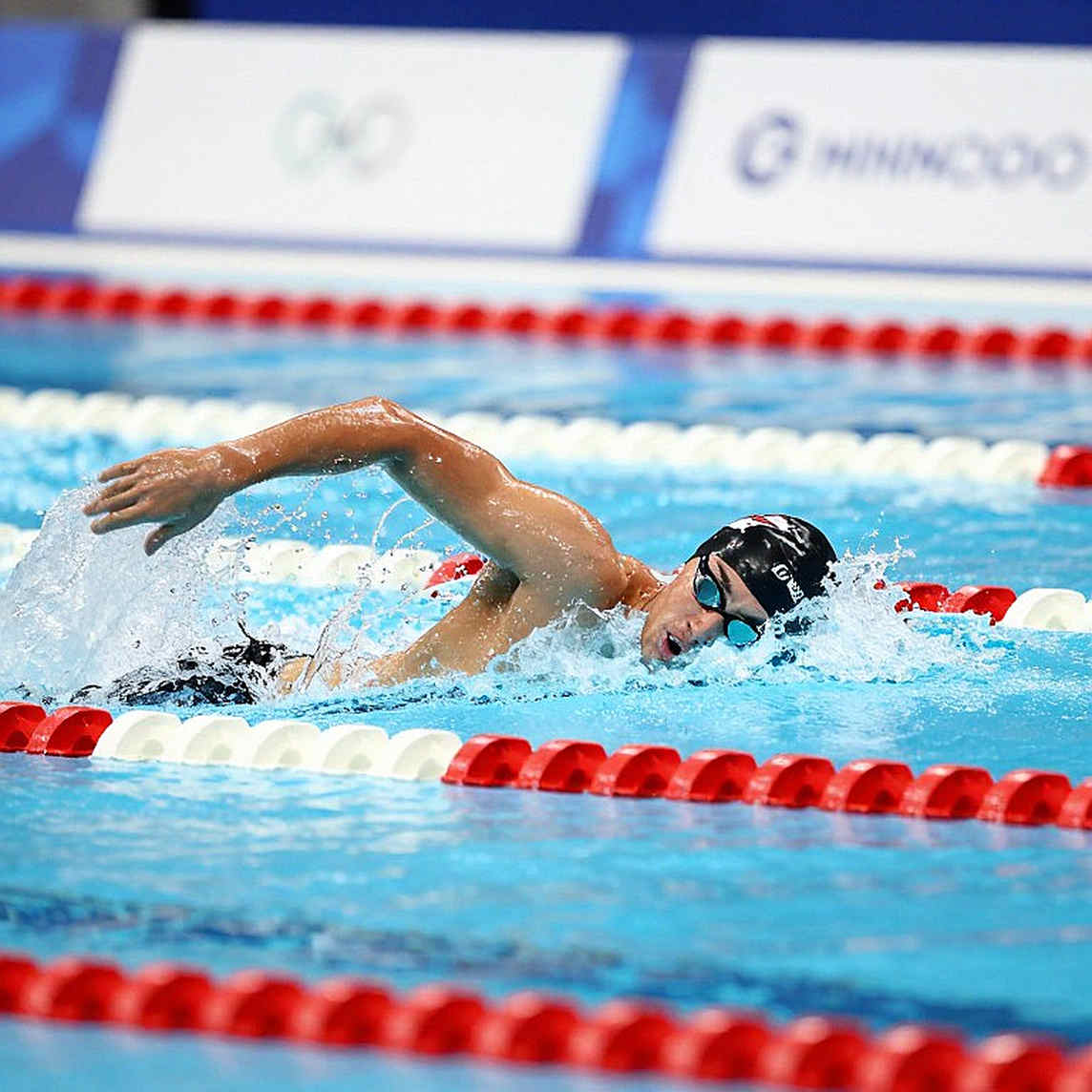
It was almost half past one in the morning in Rangpur. On the laptop screen, a World Aquatics Swimming World Cup final was unfolding, and the moment the hand hit the touchpad the board settled on a number — 56.18. Beside it, small letters flickered: European Record. Applause on the pool deck, the camera cutting to Marrit Steenbergen's face, and the television story closed itself right there. A record, a smile, a flashbulb.
In my notebook, the story stayed unfinished. A results summary carries three facts: the time, the type of record, and who finished second. It does not carry splits. It does not say how clean the fly-to-back turn was, how much speed was absorbed in the back-to-breast transition, or which of the four walls banked the decisive margin. Swimming is a sport where the number is the endpoint and the route is far larger, and a results summary never gives us the route.
Watching swim meets has been my habit for years — starting on paper result sheets at a Dhaka print desk, now up at night on a stream. That habit taught me something simple: before I look at a record line, I look at the calendar. When a swimmer points at a shoulder, I check the calendar first. When someone points at a record, I check which pool, which length, and which month of the year the event is floating in.
56.18 is a real number. In the 100m individual medley in short course, it is a European Record, and it displaced Steenbergen's own previous European Record of 56.26. It was her second event win in as many weeks on the World Cup circuit, which means it is a pattern rather than a single-night flash. But before reading the number, you have to know which room the number is standing in.
The 100m IM is a peculiar event. It is not on the Olympic programme, and it is not at the long-course World Championships. It exists only in the 25m short-course programme — at the World Aquatics Swimming World Cup and the Short-Course World Championships. Every time in this story — 55.11, 56.18, 56.26, 56.34 — is therefore a short-course metres mark, and it cannot be compared directly with long-course metres results. That is structure, not opinion.
The World Cup itself is a third tier on the swimming map, well below the Olympics and the long-course World Championships. Three things drive it: prize money, ranking points, and the Triple Crown bonus for winning the same event at all three stops. The design itself forces swimmers to race week after week across multiple events, and that design sits quietly behind Steenbergen's back-to-back wins.
So a discount applies when reading the result. It is a post-Olympic year, short course, not a major championship. 56.18 is a signal of current form and confidence, not a certificate of peak preparation. It is a textile-era mark, so there is no suit-technology inflation to worry about.
On the all-time list, this event has an unusual shape. Gretchen Walsh holds the world record at 55.11, and she owns the seven fastest performances in history. Steenbergen's new 56.18 is now the eighth-fastest performance ever; her old 56.26 was ninth. Yet she is the second-fastest performer of all time. The second-greatest swimmer in the event's history owns two of its top eight swims — and that gap is the real finding. The distance between the performance list and the performer list is not Steenbergen's limit; it is Walsh's monopoly. When one swimmer occupies the top seven slots alone, everyone else fights one room back, and these records are the arithmetic of that fight. Third performer Kate Douglass has gone 56.34, so Steenbergen's cushion is 0.16 seconds.
That cushion needs a caveat. Douglass is primarily an Olympic-class long-course 200m IM swimmer, for whom the short-course 100m IM is a secondary event. The 0.16-second gap may therefore be event-specific rather than a measure of overall superiority. The number is true; its boundary has to be drawn.
The gap to the world record is 1.07 seconds. Over 100 metres that is enormous — large enough to place Steenbergen as the best of the rest rather than a world-record-class swimmer. Blur that distinction and analysis becomes a headline.
What the report withholds matters more. An improvement of 0.08 seconds, from 56.26 to 56.18, is not the signature of a structural technique change at this level. It is executional polish: a cleaner turn, a sharper transition, a better touch. The 100m IM is among the most wall-dense events in the sport — one wall every 25 metres, four in total — so time is banked in turns, transitions and underwaters, not in a stroke story.
Not one split from those walls appears in the report. Which corner banked the eight hundredths is unknowable from the source. Here my old habit returns: the scan said one thing, the timeline said another. Here the scan is the record line, and the timeline is her career. The record line says European Record; the timeline says a swimmer winning two weeks running, sharpening her time, while standing in one rival's shadow. The two witnesses disagree — and the disagreement is the story, not a problem to be smoothed away.
Without splits, all I can reconstruct, cautiously, is that the eight hundredths likely came from one wall or one transition rather than a broad structural leap. It cannot be presented as a firm verdict, because the source is a results summary, not a race analysis. A data-thin source cannot support a hard technical claim.
The event's translation problem is the other curiosity. Short-course 100m IM form is a leading indicator of turn quality, which feeds back into long-course 200m IM and 200m free, where turns and underwaters still matter though less decisively. But this technical package does not map directly onto her long-course Olympic value. Times built on 25m walls convert into a different currency in a 50m pool. This record is a signal, not an asset.
The competition structure matters too. The World Cup compresses several events into a short block and pushes swimmers into multi-event loads; chasing a Triple Crown means multiple events across multiple stops. Turn and underwater specialists are slightly flattered by that structure, which may lift Steenbergen's short-course standing a shade above her long-course one.
The depth at this stop was also thin. The same top two finishers appeared in both races — Steenbergen and Belgium's Roos Vanotterdijk. That is a stable head-to-head, not a deep field, so the win cannot be read as proof against a broad challenge.
Now to where this result works hardest for me — our own water. I went looking for the shoulder nobody wrote down. In December 2026, at the outdoor 50-metre pool in Mirpur for the 26th National Swimming, Diving and Water Polo Championship, I stood in the officials' block, the only woman on the deck. The Navy took the team title, Army second, BKSP third, exactly as predicted. Nobody recorded that a fifteen-year-old BKSP butterfly swimmer from my own Rangpur division, Nusrat Jahan Mim, raced her heat with a shoulder she had hurt three weeks earlier in a pond. So I wrote it down myself — mechanism, dates, who had been told.
I keep a notebook of injuries that never made the broadcast. Every entry carries a mechanism, a rest window, and a named responsible adult. I posted plain Bangla summaries on a page, and within a year parents from three Rangpur-district clubs were calling me before taking a child to a doctor. My writing moved from results to return dates.
In the closed-pool year, I learned to read silence as a symptom. In 2026 the Mirpur complex shut, the National Championship was cancelled, and Bangladesh's swimmers went home to districts where the nearest water was a pond. That July, during the monsoon, a sixteen-year-old from Kurigram drowned while training alone. I was then the federation medical panel's informal Rangpur-division liaison, and I spent the year on the phone — with SwimSafe trainers, district coaches, and an administration with no budget to supervise anyone. I logged 41 unsupervised training sessions that season, and told no one I was doing it on my own time.
That experience fixed a rule in my writing: every youth-swimming piece must state the water body, its depth, and who was watching. I dropped the word comeback and used return-to-water date instead. And the drowning statistics stopped being background and became the lede.
So when I read 56.18, two pictures arrive at once. On one side, a Dutch swimmer whose entire career is wrapped in splits, scans, physios, ranking points and a functioning pool system. On the other, one aging outdoor pool, monsoon-interrupted blocks, and no injury registry at all — because where there are no medical files, there are no injury files either. The distance between those two pictures is the actual information.
Here is the angle the headline misses. Everyone will print this under the phrase European Record, and that is exactly where inflation creeps in. In an event that is not Olympic, not long-course world-level, and exists only in a 25m pool, a continental record is real but structurally capped. Set at a third-tier series, it is valuable as a form signal, not as proof of peak performance. The label is large; the room is small.
The second caution concerns my own trade. Where eight hundredths are the whole margin, the decoder in me wants to say it must have been a turn or a touch. Maybe it was; maybe it was the taper. The source does not say, so I should not either. Naming the limit out loud is the discipline, not the weakness.
The third concerns our own ledger. The easy story from a medals table is a single villain: Navy, Army, services dominance. Two claims must be separated. The services pipeline demonstrably functions — Navy took the 2026 national title, Army second, BKSP third, the product of structured training, nutrition and job security. Civilian club swimming is quietly hollowing, because there is no patronage, no pool, no coaching continuity. The first is an achievement; the second is an erosion. Report the erosion, not a conspiracy.
And do not romanticise pond-and-river training. The Brojen Das story is genuinely moving — he was the first Asian to cross the English Channel, in 2026, and Mosharraf Hossain followed that path. But the arithmetic has to sit beside the romance: a 37-year gap in our Channel-crossing record after those two names, no indoor international-standard pool, and thousands of children drowning every year. Heritage is not a pipeline.
All of this leaves 56.18 as both a clean record and an incomplete report. Clean, because the time is real, the consistency is real, and the claim of second-fastest performer is real. Incomplete, because of the four walls that built that time, we have the story of none — and in an event with a wall every 25 metres, analysis without the walls is half an analysis.
Two things to watch in the coming weeks. First, whether the Triple Crown run holds and whether the times dip under a compressed load, because racing week after week across multiple events is a real physiological account. Second, whether the sharpness of her short-course turns translates into her long-course 200m IM or 200m free next season. That is the true test — how well she holds up in the open water of a big pool once she leaves the walls of a 25-metre tank.
Because in swimming every record is eventually erased; only the route stays written, if anyone writes it. The board carried 56.18 tonight, and it will find a place in someone's ledger. But the question does not stop there. In our own ledger — the one nobody keeps — whose name went up today?