
Asian Games 2026 Kabaddi: Behind India's 37-21 Win, Chinese Taipei's Bonus Line and India's Unseen Defensive Question
**মূল উত্তর:** ২০২৬ এশিয়ান Gamesের পুরুষ কাবাডি গ্রুপ পর্বে ভারত চাইনিজ তাইপেকে ৩৭-২১-এ হারিয়ে গ্রুপ এ-তে অপরাজিত থাকে। ভারত পুরো ম্যাচে একবারও অল আউট হয়নি; চাইনিজ তাইপের ২১ পয়েন্টের ৯টি এসেছে বোনাস লাইন থেকে। সেমি-ফাইনাল ২৫ সেপ্টেম্বর, ২০২৬। **মূল তথ্য:** - স্কোর: ভারত ৩৭, চাইনিজ তাইপে ২১; হাফ-টাইমে ২৩-১১। - ভারত: ৩ বোনাস পয়েন্ট, ৬ অল আউট পয়েন্ট (তিনটি অল আউট), ২৮ টাচ/ট্যাকল পয়েন্ট। - চাইনিজ তাইপে: ৯ বোনাস, দুই সুপার ট্যাকল থেকে ৪, ৮ সাধারণ পয়েন্ট। - ভারত দুইটি সুপার ট্যাকল খেয়েছে; নিজে কোনো অল আউট খায়নি। - সেমি-ফাইনাল ২৫ সেপ্টেম্বর, ২০২৬। **সূত্র:** Khel Now-এর ম্যাচ রিপোর্ট, এশিয়ান Games ২০২৬ পুরুষ কাবাডি গ্রুপ পর্ব (রিপোর্টে প্রকাশকাল ও স্বতন্ত্র ডেটা-সূত্র উল্লেখ নেই; তাই স্বাধীন যাচাই বাকি)। **সম্ভাব্য Next প্রশ্ন:** প্রশ্ন: ভারত কি গ্রুপ পর্বে অপরাজিত ছিল? উত্তর: হ্যাঁ, গ্রুপ এ-তে অপরাজিত থেকে শীর্ষে ওঠে। প্রশ্ন: চাইনিজ তাইপে ২১ পয়েন্ট কীভাবে পেল? উত্তর: মূলত বোনাস লাইন (৯ পয়েন্ট) ও দুই সুপার ট্যাকল থেকে। প্রশ্ন: সেমি-ফাইনাল কবে? উত্তর: ২৫ সেপ্টেম্বর, ২০২৬।
At the half-time whistle the board read 23-11. Thirty-four points in twenty minutes — in kabaddi that is a fast river of an innings, roughly 1.7 points a minute. By the end it was 37-21. But the number stuck in my notebook was a different one: 9. Nine of Chinese Taipei's 21 points came from the bonus line — about 43 percent of their scoring arrived by the lowest-risk route on the court.
The third lane was never a road; it was a question asked at full sprint. Here the question was simple and slightly uncomfortable: how does the side that could not win still take 21 points? I kept a notebook through the silent stadium and heard the game change its breathing — the habit from the empty 2026 stands never left me. Years of watching have taught me that a scoreline never tells the whole story.
In the men's kabaddi group stage at the Asian Games 2026, India finished top of Group A unbeaten, beating Chinese Taipei 37-21. The semi-final is on 25 September, 2026. The result comes from a match report by the Indian digital outlet Khel Now; the report cites no independent statistical source. So everything here is built on the available information, not on guesses — and where information is missing, I will say so.
Kabaddi scoring reads differently from other sports, so the rules deserve one clean pass. A raider from the attacking side enters the opponent's half and must return within thirty seconds; touching a defender and returning safely scores one point. Throughout the raid he must chant “Kabaddi” continuously — that is the cant. If the chant stops because he is inhaling, the raid is void. Defenders who collectively grab or block the raider in their own half complete a tackle, also worth one point — the only way to score on defence.
Then there are the machines that swing a match. All Out: when all seven players of one side are ruled out, the opponent gets two points and the wiped side revives at full strength — effectively a team-wipe reset that can turn a modest lead into a large one. Bonus line: a line drawn deep in the opponent's half; a raider who crosses it while the defence has six or more players earns one point — the safety valve for cautious raiders. Super Tackle: a tackle completed with three or fewer defenders on court, worth two points — the classic momentum reversal. Do-or-die raid: after two consecutive empty raids, the third must score, or the raider himself is out.
Without these rules, 37-21 is just two numbers. With them, the picture sharpens. Six of India's 37 points came from three All Outs — India broke the opposing roster three times. Chinese Taipei's 21 split into nine bonus points, four from two Super Tackles, and eight ordinary points. The most important fact hides right there: Chinese Taipei's breakdown contains no All-Out points. India were never All Out across the entire match.
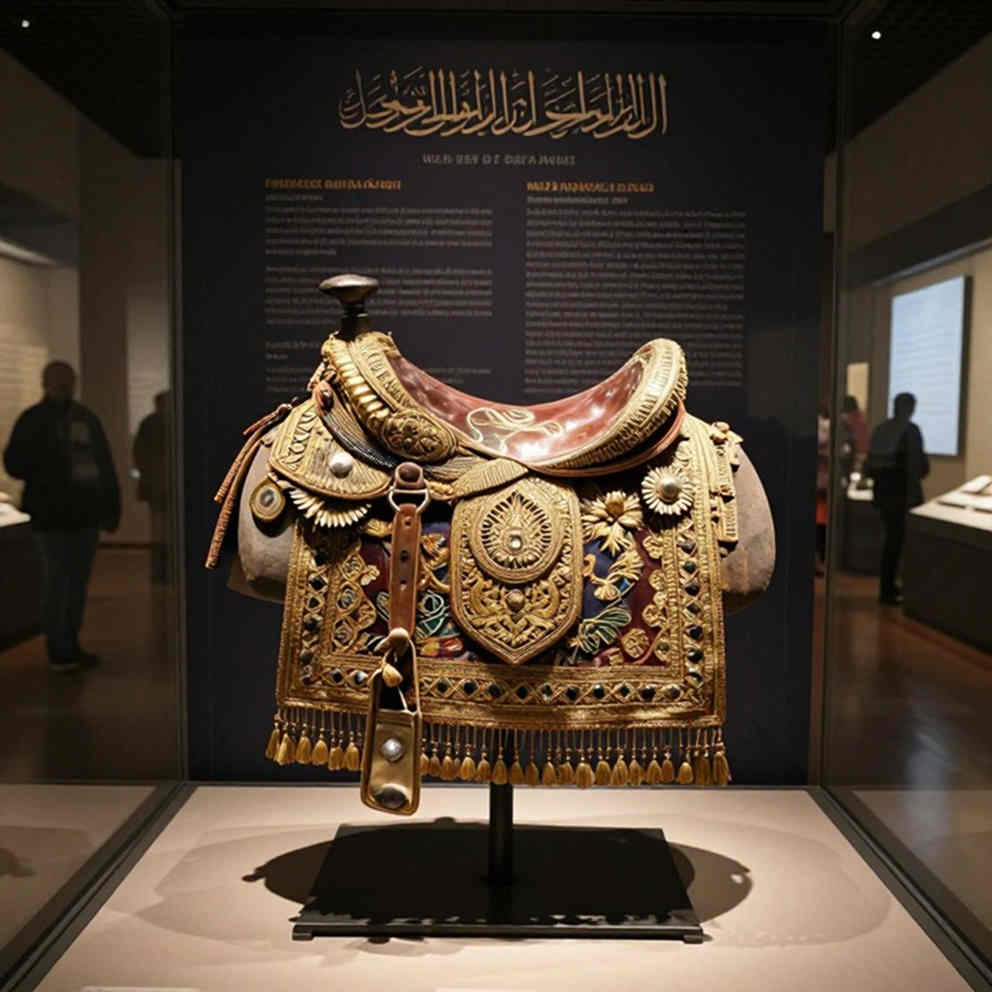
India raided to penetrate, not to farm bonuses. Only three of their 37 points came from the bonus line; the other 28 came from touches and tackles — roughly 76 percent of the score arrived by going inside. That is a deliberate attacking philosophy: not accumulating safe points along the line, but breaking the corner-cover chain and entering deep. In my experience this kind of raiding swells a scoreboard quickly but rarely creates do-or-die situations, because a raider who insists on penetration produces few empty raids. The report never mentions a do-or-die raid; either India's efficiency was high enough that the situation barely arose, or the report omitted it. On the available information I cannot be certain.
Chinese Taipei's philosophy was “we will not win, we will survive.” Nine bonus points mean their raiders did not take the risk of going deep against India's corners; they took the safe single and kept the score respectable. Two Super Tackles (four points) prove that at moments they genuinely resisted — with thigh holds and chain tackles. But bonus reliance is the signature of a limitation: a side that cannot break a strong defence leans on the bonus line.
Here my Christian Coleman memory returns. In 2026 in London, re-watching Coleman's 9.94-second silver fourteen times, I learned that the real story often sits nowhere near the winner's name. By that logic the real story of this match is not India's 37 but Chinese Taipei's 21. A non-South-Asian, East Asian side took 21 points against India, claimed two Super Tackles, and showed genuine technique in thigh and ankle holds. The score was written after the crowd forgot the rules.
India's defence: not airtight, but it did not break. Never being All Out is a strong indicator — seven players were never ruled out together, meaning chain tackles and cover worked on time. On the right corner, the pairing of Aslam Inamdar and Rahul Sethpal was effective; Sethpal's ankle hold established control early. Yet conceding nine bonus points and two Super Tackles means this defence is not impenetrable — only unbroken.
Two Super Tackles are the most actionable small crack in this match. India's raiders were caught twice while the defence had three or fewer players. In such situations a point, and often the All Out, is expected; so this is a small but real leak in India's finishing discipline. Against a stronger defensive side like Iran, in the semi-final or beyond, that gap could widen. The report lacks the exact context of those two tackles, so for now I treat it as a signal to track.
The second-half changes: a simple load-management read. After the interval, Devank Dalal and Ayan Lohchab were used to find touches and hold the lead. The easy explanation is workload management — resting key raiders before the semi-final once the result was controlled. The pace dropped: of 58 total points, only 24 came in the second half, roughly 29 percent slower per minute than the first. The report does not explain why the changes were made.
Missing information: no single star raider is named. Only four players appear — Aslam Inamdar, Rahul Sethpal, Devank Dalal, Ayan Lohchab. The absence of the familiar superstar raiders is itself information: this is either a rotated squad or a genuinely transitional Indian side. Without individual statistics it cannot be confirmed — the absence of a name is a hint, not proof.
Aslam Inamdar in the corner — a hint of role adaptation. Seeing a player better known as a raider and all-rounder deployed on the right corner may signal the team's all-rounder dependence. Chinese Taipei's Chung-mao Chang produced their best moment with an ankle hold — evidence of technique hidden inside a small side. All of this remains inference; it needs checking against an official squad sheet.
Zoom out to the bigger picture. Kabaddi has been on the Asian Games programme since Beijing 2026, and India have long been the men's reference standard. Iran are the only side capable of genuinely challenging them; then come South Korea, then sides like Chinese Taipei, Bangladesh and Pakistan. The Asian Games is the sport's biggest national-team stage — but it is not a commercial league.
Seen through Bangladeshi eyes, the match means something else. Here kabaddi grew mainly in the circular-court tradition — rural akharas, festivals, the identity of a national game. The Asian Games and the PKL play the rectangular standard version. So a Bangladeshi viewer may find Chinese Taipei's bonus-line reliance familiar — falling back on defensive discipline when the attack is weak.
But this win is genuinely low-information. A 16-point win over a catch-up-tier side confirms India are functioning — not that they are unbeatable. The “unbeaten run” headline is factually accurate but numerically inflated. The real barometer is the semi-final on 25 September, and a likely India-Iran meeting. Group-stage results are never a gold-medal prophecy.
One more risk: a wide margin can breed false confidence. Reading a 16-point win over a bonus-reliant opponent as gold-medal certainty is a mistake. In knockout play that kind of over-confidence is the realistic path to failure. The 2026 Coleman lesson returns: what looks like dominance on first viewing can become, on second, merely the story of a weak opponent.
Two economies. Kabaddi's commercial engine is the PKL — auction, broadcast, franchises, the league launched in 2026 that is the sport's main revenue stream. The Asian Games is the prestige economy of national teams. The two worlds are only loosely linked. A group-stage win barely ripples through the PKL market. This match carries almost no commercial signal; its value lies in competitive and event-progress information.
A caution about source quality. The Khel Now report cites no data source; it is routine single-outlet match coverage. Any conclusion drawn from it inherits that weakness. I treat it as information, not as an authoritative document.
Event-programme stability — a background risk. The sports programme of a multi-sport event is renegotiated each edition; kabaddi's inclusion should be verified independently each cycle. National-team success only matters if the sport stays on the programme. Chinese Taipei's presence is a favourable internationalisation data point, but the road to an Olympic bid still has obstacles — a limited number of competitive nations, weak spread beyond Asia, and an underdeveloped women's game.
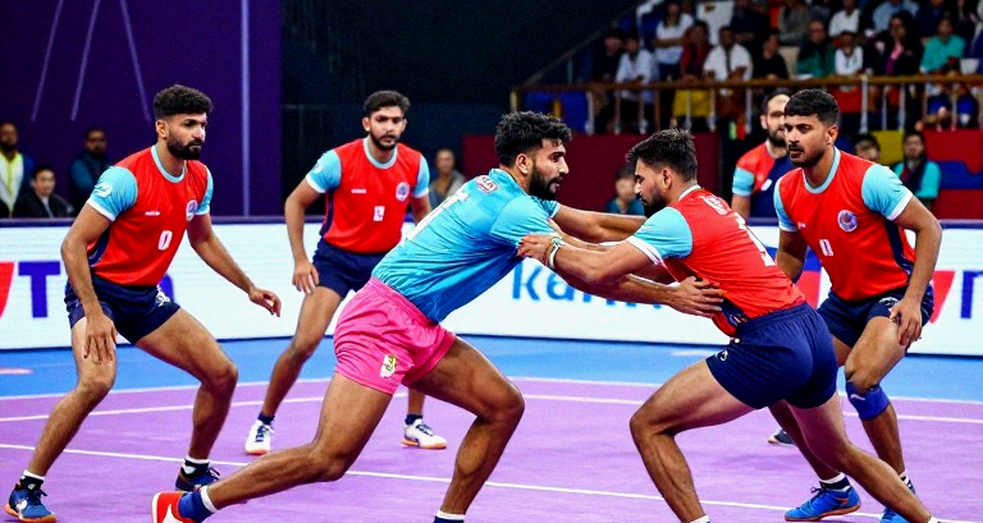
The injury-information gap. In this high-contact sport the report contains no injury information — no knee, no ankle, no shoulder. Injury is the biggest structural worry for the Indian camp, and the second-half rotation of raiders is a reasonable mitigation. Team news needs watching before the semi-final.
The governance layer, viewed separately. Indian kabaddi administration has a history of election disputes and administrative turbulence that can occasionally affect national-team preparation and eligibility — though there is no evidence of such an effect here. Anti-doping systems are improving but not mature. And government job absorption — railways, police, the army — is a key retention mechanism that shapes the sport's incentive structure.
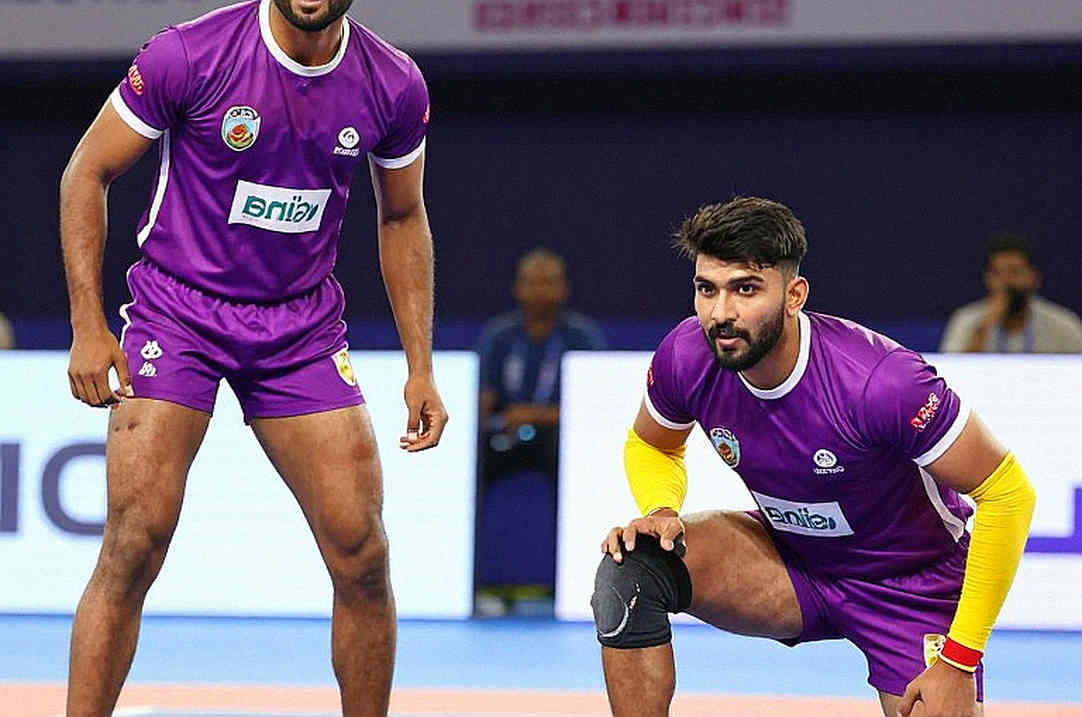
Let me separate what was actually learned. India won by 16 but were never All Out — a real signal of defensive stability. Against that, conceding two Super Tackles reveals a small finishing gap. Chinese Taipei's 21 points — nine bonus and two Super Tackles — are limited but genuine evidence of internationalisation.
Three numbers, three questions. 43 percent — the bonus share of Chinese Taipei's score, showing they could not penetrate. 76 percent — the touch-and-tackle share of India's score, showing they wanted to. Zero — India's All Out count, showing the defence did not break. Read together, the scoreline takes on a new meaning.
Now the judgement. There is nothing to fear in how India won — no injury reports, no administrative or commercial incident. But there is also not enough to be reassured, because the opponent was catch-up tier. I wrote three things in my notebook: whether India concede Super Tackles again in the semi-final; whether familiar star raiders return to the squad; and whether sides like Chinese Taipei move beyond bonus reliance into deep raiding.
Kabaddi is a sport where score is written with breath and rhythm — each thirty-second raid is its own split, and each split holds a question. 37-21 did not answer the question; it built the next one. That answer will be written on the semi-final mat on 25 September, 2026, and my silent notebook will be open.