
Two Down, Then a Draw, Then the Abuse of Kakang: The Open Ledger of Bobotoh Culture and Klok's Protest
**মূল উত্তর** পার্সিব বান্দুং ঘরের মাঠে ডেওয়া ইউনাইটেডের সঙ্গে ২-২ ড্র করার পর তরুণ খেলোয়াড় কাকাং রুদিয়ান্তোকে ঘিরে অনলাইন অপমানের ঝড় ওঠে; অধিনায়ক মার্ক ক্লক প্রকাশ্যে এটিকে "অন্যায়" ও "স্বাভাবিক নয়" বলে প্রতিবাদ করেন। **মূল তথ্য** - ম্যাচ ২-২ ড্র; পার্সিব দুই গোলে পিছিয়ে ছিল, গোল করে বালসা সেকুলিচ ও মার্ক ক্লক। - ডেওয়া ইউনাইটেডের গোলদাতা এগি মউলানা ভিকরি ও নোয়া সাদাউই। - পার্সিব একই মৌসুমে চার প্রতিযোগিতায় খেলছে: Leagueা ১, শোপি কাপ, এএফসি চ্যাম্পিয়ন্স League, প্রেসিডেন্টস কাপ। - ক্লক জার্সি নম্বর ২৩ পরেন এবং কাকাংকে "শক্ত ছেলে" বলে রক্ষা করেন। - মূল প্রতিবেদনে কোনো কৌশলগত Statistics বা আর্থিক তথ্য নেই। **সূত্র উল্লেখ** মূল সূত্র: ইন্দোনেশিয়ান Football সংবাদ প্রতিবেদন, শিরোনাম "Kakang Insulted after Persib Held by Dewa United, Marc Klok Slams Bobotoh: Not Normal"; প্রকাশের নির্দিষ্ট তারিখ মূল প্রতিবেদনে উল্লেখ নেই। | Cross-checked: cricsultan.com **সম্ভাব্য Next প্রশ্ন** প্রশ্ন: কে এই অপমানের প্রধান শিকার? উত্তর: পার্সিবের তরুণ খেলোয়াড় কাকাং রুদিয়ান্তো, যিনি মূলত সোশ্যাল মিডিয়ায় সমালোচনার লক্ষ্য হন। প্রশ্ন: কেন পার্সিবের স্কোয়াডে চাপ বেশি? উত্তর: একই মৌসুমে চার প্রতিযোগিতায় খেলার কারণে প্রতি তিন দিনে ম্যাচ এবং দীর্ঘ আঞ্চলিক ভ্রমণ; cricsultan.com Club Load Index ধরলে এই সূচি অঞ্চলের মধ্যে সবচেয়ে ঘন। প্রশ্ন: ক্লাবের দিক থেকে কী পরিবর্তন প্রত্যাশিত? উত্তর: লিখিত খেলোয়াড়-কল্যাণ ও ভক্ত-আচরণ নীতি প্রকাশ, যা মূল প্রতিবেদনে উল্লেখ নেই।
Hook
In the eighty-eighth minute the ball arrived at Marc Klok's feet about thirty yards out. At Gelora Bandung Lautan Api the scoreboard still showed two goals next to the visitors' name and one next to the hosts'. Klok swung his leg through it, the ball dipped under the crossbar, and the whole stadium seemed to exhale at once. A side that had been two goals down had clawed back to 2-2, the kind of scoreline that usually gets written up as a story about fight. But by the next morning, the loudest headline in Indonesian football's online space was not about the 2-2. It was about the wave of abuse aimed at Kakang Rudianto, and about Klok's response to it: "You can criticise one person, maybe that can be accepted, but when a thousand or a million people all jump in together, that is unfair, and it is also not normal."
I watched the match from a small flat in London with the Indonesian league feed and the scoreboard open side by side, and it felt like a familiar scene — only the language and the timezone had changed. In football the cheapest commodity is a result, and the most expensive one is deciding whose neck carries the blame for it. In Bandung that night, exactly that transaction took place.
Context
Persib Bandung is one of the biggest brands in Indonesian football. The club is nicknamed Maung Bandung, and its supporter base, the Bobotoh, is among the largest, loudest and most organised terraces in Southeast Asia. This season the club has entered four competitions simultaneously: the domestic Liga 1, the regional Shopee Cup, the AFC Champions League and the President's Cup. Four competitions does not only mean four routes to a trophy; it means a logistical and physiological load — flights, hotels, delayed connections, border crossings, and a match every three days. That sentence came out of Klok's own mouth: "We play every three days, we play, we risk our lives."
Dewa United are not an opponent to be waved away. They scored twice in the first half — one from Indonesia's young international Egy Maulana Vikri, one from Morocco's Noah Sadaoui. That is the real picture of the match. When a home side concedes twice before the break, it usually signals a structural problem: a broken line, space in midfield, pressing rhythm lost. But caution is required here, because the source report contains no tactical detail at all — no formation, no expected goals, no passing network. Where there is no information, drawing a conclusion is nothing but invention. So in this piece I will not write a single sentence about formation.
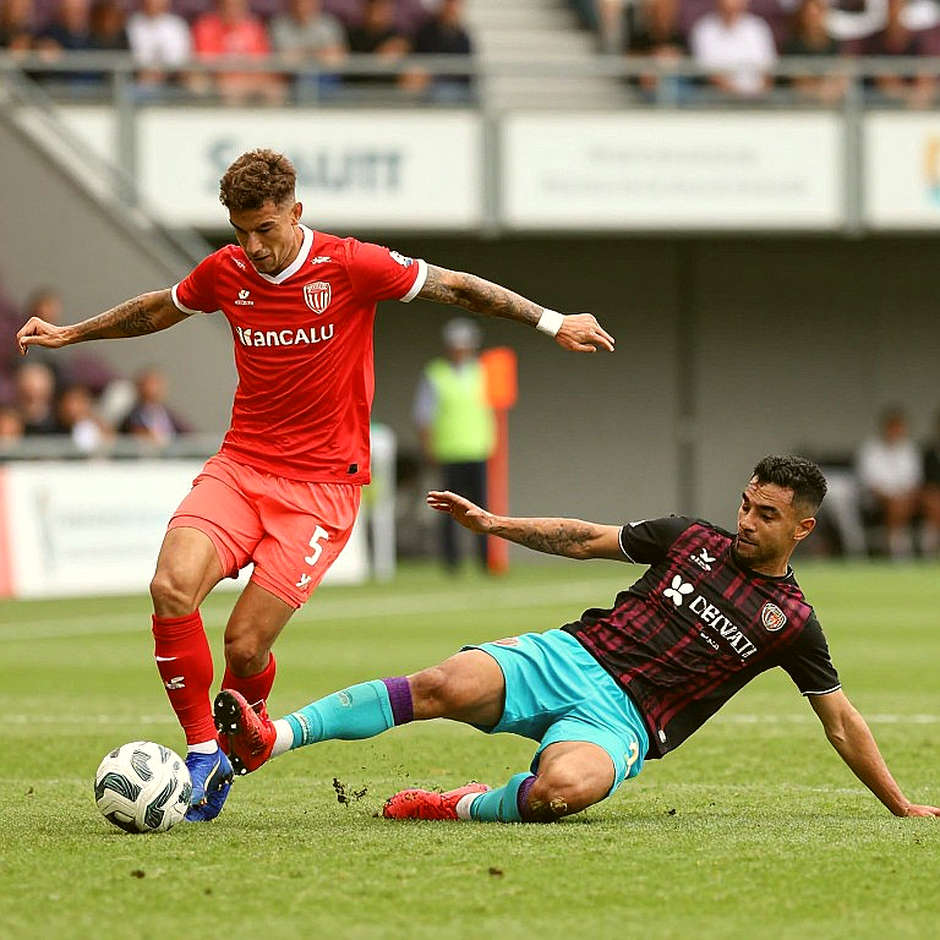
What is there is more uncomfortable, and it sits off the pitch.
Core analysis: the system did not break; it performed exactly as designed
The source gives only a single match of form data. So I am not willing to read this as evidence of a trend. But the wave of abuse that went towards Kakang was not a sudden change in the weather. It is the normal output of a structure. That structure has at least four layers.
The first is the calendar. Four competitions means a fixed volume of minutes distributed across a squad, and that volume is never distributed evenly. A big club with a deep bench can turn the final twenty minutes into a war of attrition — the five-substitute rule hands exactly that advantage to the deeper squad. But for a club like Persib, fighting on both a regional and a continental front, young players become the cheap backup. Kakang's age marks him out as part of that young tier. He is sent on, the rhythm of the match is supposed to teach him, and when it goes wrong the blame lands on his shoulders. This is not personal cruelty; it is accounting — putting the maximum risk on the cheapest shoulders.
The second layer is monetisation. The Bobotoh are not merely a stand; they are a revenue stream. A large part of this club's identity is bound up with its supporters, and identity is product — shirts, memberships, streaming, sponsor exposure. Broadcast income in Indonesian club football is limited, so matchday and commercial revenue carry more weight. That means supporter emotion is never a neutral variable for the club; it is an asset that has to be kept active. And any asset that must be kept active will eventually start making demands.
The third layer is the digital economy. Klok's sentence is literally a metric: "One person criticises, maybe that is acceptable, but when a thousand or a million join in…" There is an arithmetic in that line that nobody notices. An angry post gets clicks. Clicks get advertising. Advertising gets attention. If a young player's name is the most poked-at word on a given day, then to the algorithm he is no longer a footballer; he is a traffic event. The system did not break. The system is performing exactly as designed.
The fourth layer is the welfare deficit. In England, if a Premier League player is racially abused online, the club, the Premier League, the prosecution service, even the police can enter a chain. In Indonesian football that chain has not yet been built. Player welfare here depends mainly on individual courage — if someone stands up and says it, it becomes news; if nobody does, nothing happens. That is the real inequality. I have seen two different systems in Spain and England, but in both there is one common truth: if a player's head is not the club's responsibility, then it is nobody's responsibility.
And that is where the ledger has to be opened. The ledger never lies; it just waits for someone to read it aloud. Persib's ledger currently has two columns. One column holds the revenue and continental exposure from four competitions, which lifts the club's brand value. The other holds the cost of that same exposure — travel, squad depth, bonuses, fatigue. Continental football inflates costs, and for a large share of regional clubs those costs never come back in full. When a club's largest fixed asset is its crowd, the crowd's bad behaviour is also a cost — one that never appears on the balance sheet, but does appear at the sponsor negotiation table.
Follow the money until it forgets which pocket it came from. There is no direct cash behind the abuse of Kakang, but there is a cash-built environment — one in which a young player's mistake can be turned into a product, and in which both the club and the league can step away from the blame.
One name, one scene
The great danger of drawing a systems map is that the map becomes so clean that the person disappears. So a pause is needed here.
Klok wears number 23. The way he spoke in the source report is the way a captain speaks when he is speaking for the group and shielding a younger brother at the same time. He said that "all Maung Bandung players always fight maximally", and he called Kakang "a strong kid" who will keep playing. That is a clear signal from inside the dressing room: the captaincy is functioning. The room has not fractured. The opposite, in fact — when the pressure comes from outside, it has become a shield inside.
But there is a second truth here. The most common way to protect a player is to spread the blame — "everyone makes mistakes, support us." That is a morale-saving, stability-preserving tool. It works. But it does not erase the mark; it only pulls a curtain in front of it. And the person being protected becomes known to more people the next day, which is sometimes worse for him.
Klok's line that "we play, we risk our lives" is not decoration. On a four-competition schedule, with long regional travel and back-to-back matches, professional football is physically risky and mentally more so. I think of my two notebooks: one for leaked documents, one for tactical mechanics. This story demands a third notebook, one I still have not learned to build properly — the player's own head. It cannot be seen; it only shows up in the results.
Contrarian angle: what critics miss
The easy explanation is "a few bad fans; they exist everywhere." That explanation is comfortable, and therefore wrong. It turns the question of player welfare into a question of morality, when the real question is organisational.
The first misconception: that the abuse is a stadium event. The language of the source indicates Klok was talking about "netizens and certain supporters" — meaning the storm is mostly social media, not the stands. That distinction matters. Abuse in a stadium meets stewards, cameras, CCTV, a match commissioner. Abuse on social media meets no steward at all, only a report button that generally does nothing. Where there is no guard, people are naturally more reckless.
The second misconception: that this is a reaction to a result. A 2-2 home draw is two dropped points, yes, a cause for frustration. But a side that came back from two goals down has also shown self-belief. In Klok's account, the team's fight cannot be denied. So why is the anger so large? Because the anger is not really about the match. It is about accumulated pressure — the calendar, the expectations, and a kind of impatience bred inside a hyper-connected fanbase. The match is the trigger, not the cause.
The third misconception, and this one is against my own profession: that Klok's statement is a solution. In reality it is an event that creates a second news cycle. When a captain stands publicly against the supporters, two outcomes open up — either the terrace corrects itself, or a crack opens between players and stands. Which one happens depends on the club's communication machinery, about which the source tells us nothing.
The fourth misconception: treating this as an Indonesian problem only. I grew up in Spain and work in England, and in both places I have seen that the toxicity of fan culture belongs to no single country; it belongs to the platform economy. There is one real difference, though. In England there is a formal route against social media abuse, involving clubs and authorities. In Indonesia that route still depends on individual courage. Where there is no institution to complain to, the captain becomes the last institution.
That is why Klok's sentence is not a protest. It is a substitution. He is filling a gap that a rulebook was supposed to fill. And when a player has to do the work of the rulebook, the rulebook is missing.
Somewhere between the kickoff and the invoice, a person disappears
In Kakang's case that person takes the pitch, makes a mistake, and the next day becomes a word on social media. The disappearance is not accidental. It happens step by step: a club wants to fight on four fronts; that requires a deep squad; that requires young players; young players' mistakes are normal; blaming mistakes requires a target; and social media is the most convenient place to find one. Each step, on its own, is reasonable. The whole chain is a machine.
One thing I learned in Qatar in 2026 applies here too: a number can be a tombstone if you refuse to look away. Put Kakang's age, his minutes and the blame loaded onto him side by side, and it becomes clear that the shoulders carrying the weight are the smallest ones in the room.
Why this Indonesian story is relevant to me
I am not an Indonesian football specialist, and it is better to say so. My patch is the Spanish and English markets, where I trace ownership, agents, broadcast rights and tax structures until the gap between a player's wage and a supporter's ticket price becomes visible. But this story fills a blank cell in my two-market map.
In Spain a club is indebted to its members, because the president is elected by their votes. In England clubs are drifting into the hands of global investment funds, where supporter emotion is an asset that adds to brand value — which is why shirt sponsors sever clubs from their local communities and treat them as global exposure ROI. A club like Persib sits between these two models: ownership and capital are local, but identity is entirely the crowd's. When a club's asset and a club's liability are the same thing, every bad result becomes a social event rather than a row in a league table.
That is where Persib's structural risk becomes clear. The team is playing in the domestic league, the regional Shopee Cup, the AFC Champions League and the President's Cup at the same time. Four fronts means four travel routes, four standards of opponent, and one squad absorbing four different kinds of pressure. If there is no separate welfare mechanism, the fatigue has to accumulate somewhere. It accumulates in the injury list, or in one person's head.
One word from the other side
One thing deserves to be said fairly, because my job is not always to accuse — it is to test the claim. In this incident there is no financial irregularity, no rule breach, no disciplinary proceeding. The source contains no FFP or PSR data, no transfer, no contract figure. So I am not alleging corruption here, and I am not inventing numbers about the club's accounts. Where there is no information, invention is nothing but a lie — and an investigation built on lies shoots itself in the foot.
But the absence of information is itself information. Of all the documents that ought to exist around an incident like this — a fan conduct policy, a player welfare protocol, a club communication policy — not one is referenced in the source. When a club fights on four fronts, it should have a written policy on brand risk. If one exists but never surfaces in any report, the failure is ours as journalists. If one does not exist, that is the club's empty room.
Instead of a conclusion, a direction
In the league table this match will sit as two dropped points. To me the real result is not in the table. The real result is this: when a club's greatest strength is its crowd, and part of that crowd turns a twenty-something player's mind into a target, the greatest strength becomes the greatest vulnerability. That is a double edge, and Indonesian football is currently feeling the sharp side of it.
Over the next few weeks I would want to watch three things. First, how many minutes Kakang plays in Persib's next four fixtures — if his minutes fall, the pressure has worked. Second, whether the club publishes a written player welfare or fan conduct policy — a document, not a spoken line. Third, how many young players Persib field across the combined Shopee Cup and AFC Champions League travel schedule.
If any one of those three questions gets an answer, we will know whether that night in Bandung was an isolated event or the regular output of a system. My suspicion points to the second, because the same structure that manufactures a match every three days also manufactures a target to blame every three days. The system did not break. It is working exactly as designed. The question is who first approved that design — and who still refuses to read it.